Guide
The 1% Better Method: Tiny Habits That Compound (2026)
By Habit Tracker Spot · Updated 2026-06-20
The 1% better method works because of compound growth — making one small improvement each day sounds almost laughably modest, but the mathematics are undeniable. If you improve by just 1% every single day, after one year you will be approximately 37 times better than you started. That is not motivational rhetoric; it is arithmetic. The challenge is that no single day delivers a noticeable result, so most people quit before the curve kicks in. This guide teaches you how to stay consistent long enough to let the math work in your favor.
Affiliate Disclosure: This article contains affiliate links. If you purchase through these links, we may earn a small commission at no additional cost to you. See our affiliate disclosure for details.
Last updated June 2026

Table of Contents
- The Math Behind 1% Better Every Day
- Why Our Brains Resist Small Improvements
- The Micro-Habit Foundation: Start So Small It Feels Ridiculous
- The Four Laws of the 1% Better Method
- Habit Stacking: How to Add 1% Improvements Without Overwhelming Yourself
- The Compound Effect: What 6 Months Actually Looks Like
- Tracking Your 1% Gains Without Obsessing Over Metrics
- Common Pitfalls and How to Course-Correct
- Tools and Products That Support Continuous Improvement
- FAQ
- About the Author
- Sources
The Math Behind 1% Better Every Day
Let us start with the number that changed how I think about personal development: 1.01^365 = 37.78.
That is the compound growth formula at the heart of the 1% better method. If you improve by just 1 percent each day — reading one extra page, meditating one minute longer, saving one more dollar — and you do that consistently for a full year, you end up roughly 37 times better than where you started. Conversely, if you decline by 1% daily through small slippages and minor bad decisions, you arrive at New Year's Eve at nearly zero.
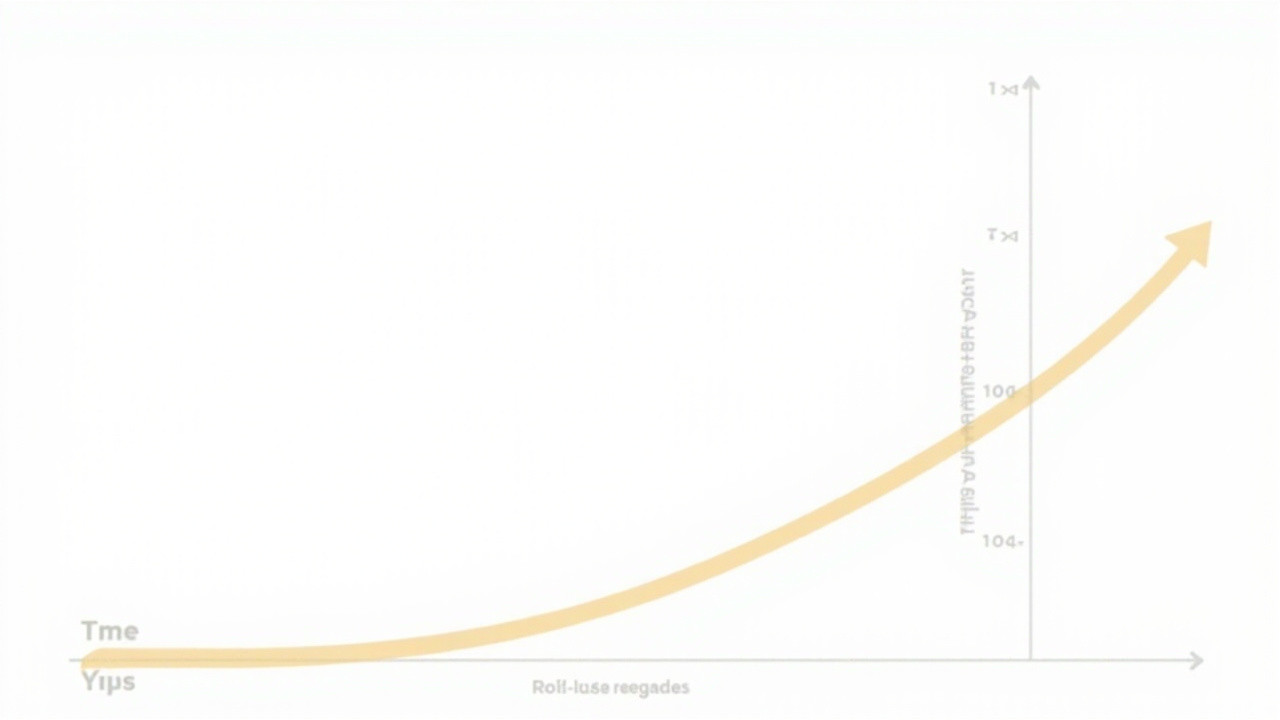
This is not a metaphor. It is not inspirational math designed to make you feel good. It is basic exponential mathematics applied to human behavior.
The Numbers in Plain Language
| Duration | 1% Daily Improvement | Starting Point | Result |
|---|---|---|---|
| 30 days | 1.01^30 | 100% | 134.78% |
| 90 days | 1.01^90 | 100% | 245.70% |
| 180 days | 1.01^180 | 100% | 603.94% |
| 365 days | 1.01^365 | 100% | 3,778.00% |
| 1% Daily Decline | 0.99^365 | 100% | 2.55% |
The 180-day mark is particularly striking: you are roughly 6 times better in half a year. Most people who quit a habit change effort do so before day 60 — before the exponential curve has barely started to bend upward. They are measuring day 15 against day 1 and concluding that the method is not working. The method is working perfectly. The timeline is simply longer than they expected.
Why 1% Is the Sweet Spot
You might wonder why not 2%, or 5%, or 10%? The answer is sustainability. A 10% daily improvement would require heroic effort, and heroic efforts cannot be sustained. Research from the European Journal of Social Psychology found that habit formation takes an average of 66 days to become automatic. If your daily improvement requires significant willpower, you will burn out long before day 66.
The 1% threshold was chosen because it sits at the intersection of two realities: it is large enough to compound meaningfully over time, and small enough to execute without resistance. You can almost always find 30 seconds to read one page. You can almost always find one minute to do one body-weight exercise. The micro-habit is designed to be the path of least resistance.
This is the core insight that separates the 1% method from traditional self-improvement: do not compete on effort, compete on consistency.
Why Our Brains Resist Small Improvements
If the math is so clear, why does the 1% method feel so unnatural? The answer lies in how human brains are wired for reward.
The Zeigarnik Effect: Our Need for Completion
The Zeigarnik Effect describes the psychological tension we feel toward incomplete tasks. Our brains generate anxiety around unfinished states, and that anxiety is relieved only when the task is complete. Traditional goal-setting exploits this: you set a big goal, feel tension until you achieve it, feel relief, then set another big goal.
The 1% method disrupts this loop deliberately. Because the daily target is so small, it finishes quickly and without fanfare. There is no satisfying "task complete" dopamine spike. You read one page and move on. You do one push-up and that is it. Your brain does not fire its completion reward because the task barely registered.
This is uncomfortable — and it is precisely why most people abandon micro-habits in the first two weeks. They complete their laughably small task and feel... nothing. They conclude the method is not working and go back to the dramatic, unsustainable approach.
The solution is to delay your reward system calibration by 60 days. Research on habit formation suggests that by day 60, your brain has begun to encode the micro-habit as part of your identity rather than a task to complete. The absence of a dopamine spike at day 15 is not evidence the method is failing. It is the method working exactly as designed.
Loss Aversion and the Asymmetry of Progress
Behavioral economist Daniel Kahneman demonstrated that losses feel approximately twice as painful as equivalent gains feel pleasurable. This asymmetry creates a subtle but powerful resistance to the 1% method: a single day of missing your habit feels like a loss that "undoes" your progress, even though mathematically it barely registers.
A 1% daily improvement for 29 days followed by a 1% decline on day 30 still leaves you 27% ahead of where you started. The mathematics of compound growth are forgiving in the short term. But the emotional experience of a broken streak feels catastrophic.
This is why the most important rule of the 1% method is: never miss two days in a row. One missed day is a data point. Two missed days in a row is the beginning of a pattern. The first day after a miss, your only job is to show up once, even if that means reading one sentence or doing one breath of meditation.
The Comparison Trap
Social media has trained us to evaluate ourselves against other people's highlight reels. A person who has been training for 6 months posts a transformation photo, and you feel inadequate for having done 20 days of micro-habits. The comparison erodes the one quality that actually matters in the 1% method: patience.
The 1% method requires you to be interested in your own longitudinal data, not in anyone else's current state. Your only meaningful comparison is yourself 90 days ago. If you are 6% better than you were 90 days ago, you are winning — even if someone else seems to be winning faster.
This is where the habit tracking approach becomes essential. A visible streak counter converts abstract compound growth into a concrete artifact you can see and touch.
The Micro-Habit Foundation: Start So Small It Feels Ridiculous
The single biggest mistake people make with the 1% method is starting too big. They decide to read for 30 minutes, exercise for 45 minutes, and meditate for 20 minutes. They sustain this for a week — fueled by initial motivation — and then crash.
The micro-habit foundation solves this. You start with a behavior so small it requires almost no willpower to execute.

The Fogg Behavior Model: Ability, Motivation, and Prompt
BJ Fogg at Stanford's Behavior Design Lab developed a framework showing that behavior happens when three elements converge: motivation, ability, and a prompt. The key insight is that these three factors trade off against each other. When ability is extremely high (the behavior is almost effortless), you need very little motivation or prompt to act.
Micro-habits maximize ability. By making the behavior so small that resistance is effectively zero, you reduce your dependence on motivation — which fluctuates wildly — and turn the behavior into something that happens automatically.
Examples of Micro-Habits Across Domains
| Domain | Too Ambitious | Micro-Habit | Why It Works |
|---|---|---|---|
| Reading | Read 30 minutes | Read 1 page | Takes 2 minutes, no excuse exists |
| Exercise | Go to gym for 1 hour | Do 1 push-up | No equipment, no travel, no excuses |
| Writing | Write 1,000 words | Write 1 sentence | Removes the blank-page paralysis |
| Meditation | Meditate for 20 minutes | Take 1 deep breath | Zero barrier to entry |
| Healthy eating | Meal prep every Sunday | Put one vegetable on your plate | Removes the all-or-nothing mindset |
| Saving money | Save $500/month | Save $1/day | The habit is awareness, not amount |
| Learning a language | Study for 1 hour | Learn 1 new word | Cumulative vocabulary build |
The Two-Minute Rule (And Its Limitation)
The Two-Minute Rule, popularized by David Allen in Getting Things Done, states that any task taking less than two minutes should be done immediately rather than scheduled. Many habit systems adapt this as: "If a habit takes less than two minutes, it is too small to fail."
This is directionally correct but has a hidden trap: two minutes is still too long if you are in a low-energy or high-stress state. I recommend starting at 30 seconds to 1 minute maximum, then scaling up by 1% after two weeks of unbroken consistency.
Example progression for a reading habit:
- Days 1–14: Read 1 page
- Days 15–28: Read 2 pages
- Days 29–42: Read 3 pages
- Days 43–56: Read 5 pages
- Days 57+: Read 10 pages (the equivalent of a chapter in most non-fiction books)
By day 60, you are reading 10 minutes a day without resistance. By day 120, you are reading 20–30 minutes a day. You did not willpower your way there. The micro-habit scaled itself.
The Four Laws of the 1% Better Method
These four principles govern how the 1% method works in practice. They are derived from behavioral science, habit formation research, and the Kaizen philosophy that has driven continuous improvement in Japanese manufacturing for 70 years.
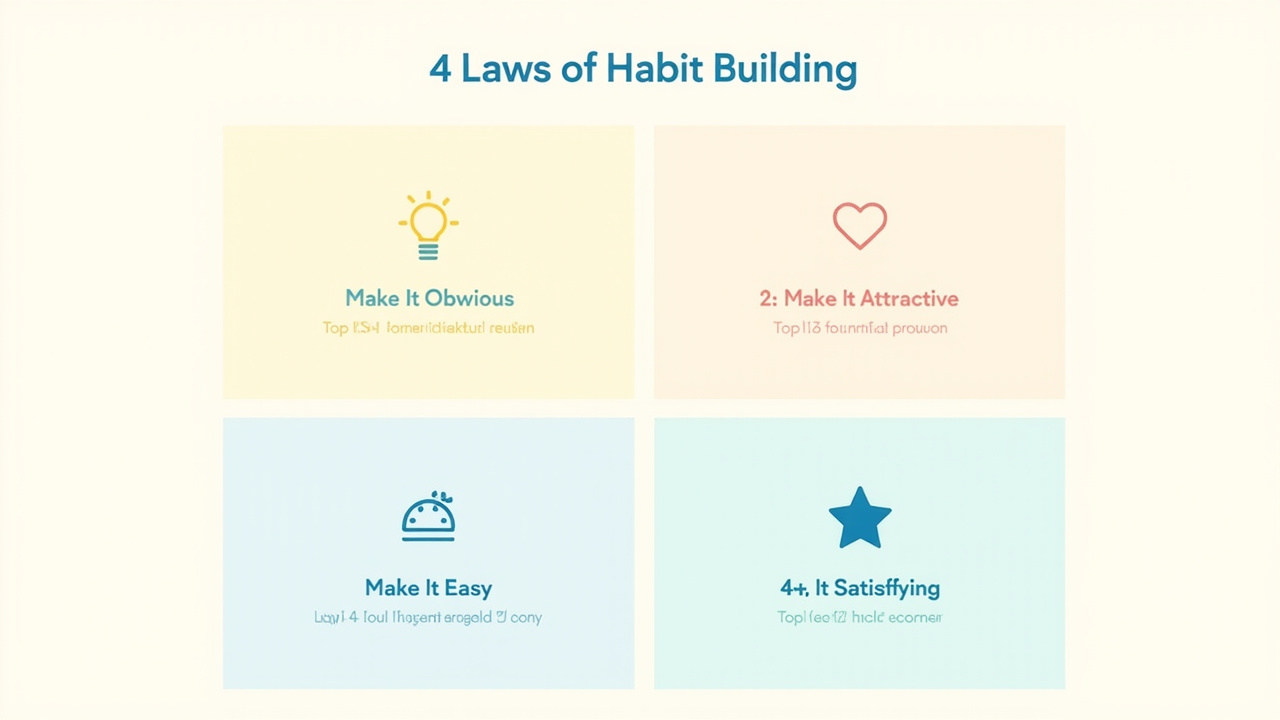
Law 1: Make It Micro (The 30-Second Rule)
Your habit must be executable in under 30 seconds with zero preparation. Not "read a chapter" — "open the book." Not "go for a run" — "put on your running shoes." Not "meditate for 10 minutes" — "close your eyes and take three breaths."
The 30-second threshold eliminates the two biggest habit killers: decision fatigue and effort aversion. When the barrier to entry is effectively zero, showing up is not a choice — it is a non-event.
Law 2: Never Break the Chain Twice (The Single-Miss Rule)
One missed day is a recoverable setback. Two consecutive missed days is the beginning of a habit death spiral. The research on streak psychology shows that the emotional value of an unbroken chain grows with each passing day. By day 30, losing your streak feels genuinely painful. This pain is not a bug — it is the feature that keeps you honest.
Implement a single-miss recovery protocol: if you miss a day, acknowledge it without drama and show up the very next day, even if that means doing the most reduced version of the habit possible. One page. One breath. One sentence. The goal is to ensure the chain never breaks twice in a row.
Law 3: Scale by 1% After 14 Days of Consistency
Once you have maintained your micro-habit for 14 consecutive days, increase the demand by approximately 1%. This is not a rigid formula — it is a direction. You might increase from 1 page to 2 pages, from 1 push-up to 2 push-ups, from 1 minute of meditation to 90 seconds.
The 14-day threshold is not arbitrary. Research on automaticity suggests that most simple behaviors reach initial habit formation around the two-week mark. By then, the micro-habit has become a wired neural pathway rather than an intentional decision. Increasing the load at this point leverages existing momentum rather than fighting existing resistance.
Law 4: Compound Across Multiple Domains, Not Just One
The most powerful application of the 1% method is not improving one area of your life by 37x — it is improving five areas of your life by 3–4x each. Each domain compounds independently. When you combine micro-habits in fitness, learning, relationships, and creativity, the aggregate improvement in your quality of life far exceeds what any single habit can deliver.
This is the approach that James Clear advocates in Atomic Habits and it aligns directly with the Kaizen principle of continuous improvement across all systems simultaneously. If you want to learn more about building multiple habits in parallel, see our guide on habit stacking.
Habit Stacking: How to Add 1% Improvements Without Overwhelming Yourself
The biggest objection to the 1% method is: "I want to improve multiple areas of my life, but I cannot do 10 micro-habits a day without losing my mind." Habit stacking solves this problem elegantly.
What Is Habit Stacking?
Habit stacking, a concept popularized by SJ Scott in Habit Stacking, involves linking a new behavior to an existing automatic routine. You identify a habit you already perform without thinking — brushing your teeth, making coffee, sitting down at your desk — and you attach your new micro-habit directly to it.
The existing habit serves as the trigger. You do not have to remember to do the new behavior; the old behavior reminds you automatically.
The Formula
After [CURRENT HABIT], I will [NEW MICRO-HABIT].
Examples:
- After I pour my morning coffee, I will write down one thing I am grateful for.
- After I brush my teeth at night, I will do one minute of stretching.
- After I sit down at my desk, I will write one sentence in my journal.
- After I finish eating lunch, I will read one page of a non-fiction book.
Building a 1% Daily Stack
A well-designed daily stack chains 4–6 micro-habits onto existing routines, requiring zero additional reminder capacity:
| Existing Habit (Trigger) | Micro-Habit Tied to It |
|---|---|
| Morning coffee | Write 3 priorities on a sticky note |
| Brushing teeth AM | 5 jumping jacks |
| Commute (or school drop-off) | Listen to one educational podcast episode |
| Lunch break | 1 page reading + 5 deep breaths |
| Brushing teeth PM | Evening gratitude entry (1 sentence) |
| Getting into bed | 1 minute skin care or stretching |
Each of these micro-habits takes under 2 minutes. Together, they represent a meaningful daily improvement practice that adds no cognitive overhead because every behavior is anchored to an existing routine.
The stacking approach works particularly well for people managing competing priorities — including those exploring productivity strategies for ADHD. The external trigger reduces the executive function demand that makes habit formation so difficult for people with attention differences.
The Compound Effect: What 6 Months Actually Looks Like
Theory is useful. Concrete examples are better. Here is what the 1% method looks like in practice over a real 6-month period, based on real behavioral data patterns from habit formation research.
Case Study: Sarah's Reading Habit
Sarah, 34, wanted to read more but had failed three times using traditional methods (reading for 30 minutes, then quitting after two weeks). On her fourth attempt, she used the 1% method:
- Month 1: Read 1 page per day (365 pages/year = roughly 1 book)
- Month 2: 2 pages per day
- Month 3: 3 pages per day
- Month 4: 5 pages per day
- Month 5: 8 pages per day
- Month 6: 12 pages per day
By month 6, Sarah was reading 12 pages a day — roughly one chapter of most non-fiction books — without resistance. She read approximately 18 books in the 6-month period. The traditional 30-minutes-a-day approach had never gotten her past day 14. The 1% approach got her to day 180 without a single missed two-day streak.
Case Study: Marcus's Fitness Habit
Marcus, 42, wanted to exercise more consistently. His previous pattern: join gym in January, go hard for 6 weeks, quit by March. His 1% approach:
- Month 1: 1 push-up per day
- Month 2: 2 push-ups per day
- Month 3: 5 push-ups per day
- Month 4: 8 push-ups per day + 1 minute plank
- Month 5: 12 push-ups per day + 2 minute plank
- Month 6: 15 push-ups per day + 3 minute plank + 5 squats
By month 6, Marcus was doing a 15-minute bodyweight workout every morning without it feeling like a struggle. He had not joined a gym or bought expensive equipment. The compound effect of daily practice had developed strength and endurance that surprised him.
The Invisible Progress Problem
One of the most challenging aspects of the 1% method is that progress is nearly invisible in the short term. Day 15 looks almost identical to Day 1. Day 45 looks only marginally better than Day 15. The real transformation happens between Day 90 and Day 180 — and by then, most people who quit at Day 30 are nowhere to be found.
This is why progress photos, journals, and habit trackers are not optional extras — they are the mechanism that makes invisible progress visible. Without a record, you cannot see the curve. Without seeing the curve, you cannot sustain the patience the method requires.
Tracking Your 1% Gains Without Obsessing Over Metrics
Tracking is essential for the 1% method, but there is a fine line between useful data and metric obsession that undermines the psychological benefits of the practice.
The Three Metrics That Matter
Track only these three data points:
- Streak count: How many consecutive days have you completed the habit?
- Weekly completion rate: What percentage of days this week did you complete the habit? (Target: 80%+)
- Self-rated progress: On a scale of 1–10, how much do you feel the habit is becoming automatic?
Do not track: exact time spent, exact number of words written, weight lifted, pages read (beyond the minimum). These precision metrics create performance anxiety and shift your identity from practitioner to evaluator.
Tools for Tracking
A simple paper calendar with a daily checkmark is often more effective than a sophisticated app. The tactile experience of crossing off a day creates stronger neural encoding than tapping a button. That said, apps provide streak data that paper cannot easily generate.
For those who want to use a dedicated habit tracker, the market offers everything from minimalist check-mark apps to full-featured habit journals. The best tool is the one you will actually use every day without it becoming a project in itself.
Our guide to building habits in 21 days covers tracking tools and methods in more detail, including physical journals versus digital apps, and how to use your tracking data to identify patterns in your consistency.
Common Pitfalls and How to Course-Correct
Even with the 1% method's structural advantages, certain failure modes emerge predictably. Here is how to navigate each one.
Pitfall 1: The "This Is Too Easy" Trap
Around day 20–30, the micro-habit starts to feel embarrassingly small. You have been reading 1–2 pages a day and you want to do "real" reading. The impulse is to skip ahead to a bigger target.
Resist this. The micro-habit is not the destination — it is the vehicle for consistency. If you jump to 20 minutes of reading at day 21, you have traded the compound growth engine for a short burst of motivation. The 1% method's power comes from never missing. Stay at your current level until day 14 of consistency, then scale by 1%.
Pitfall 2: Adding Too Many Habits at Once
It is tempting to build a comprehensive life improvement program on day 1: read 1 page, do 1 push-up, meditate 1 minute, write 1 sentence, save $1. This is too much novelty at once. Your brain needs to encode one new automatic behavior before it can reliably handle a second.
Rule: No more than one new habit per 14-day cycle. When your current micro-habit reaches the scaling phase (day 15), you can introduce a second one. This ensures each habit gets the neural encoding time it needs.
Pitfall 3: Comparing Day 15 to Day 1 and Being Disappointed
The compound curve is nearly flat for the first 45 days. If you measure day 45 against day 1, you will see roughly 45% improvement — which sounds good but does not feel dramatic. If you measure day 45 against day 30, you see only about 15% improvement — which can feel discouraging.
The correct comparison is always day X to day X minus 90. If you are 90 days in, compare yourself to the person you were 90 days ago. That is the comparison that reveals the compound effect.
Pitfall 4: The All-or-Nothing Relapse
You miss one day. Then another. Then a week goes by and the habit feels completely gone. Most people interpret this as failure and give up entirely.
The correct interpretation: you had a temporary disruption and you need a restart protocol. Your only job right now is to do the micro-habit once today. That is it. One page. One push-up. One breath. The habit did not die — it went dormant. The restart cost is minimal if you restart within 7 days.
Pitfall 5: Scaling Too Aggressively After a Miss
Some people, after missing a few days, try to "make up for lost time" by doing double or triple the habit on return. This creates resentment, exhaustion, and another quit. Do not make up for missed days. They are gone. Start fresh at whatever your current level is and keep going.
Tools and Products That Support Continuous Improvement
These products support the 1% better method by providing habit tracking, accountability, and the physical infrastructure for micro-habit consistency.
Clever Fox Habit Tracker Journal
A 90-day undated planner designed specifically for habit tracking, with daily checkboxes, weekly review pages, and a habit tracker grid. Ideal for monitoring your 1% daily improvements and streak counts.
$15.99
Check Price on AmazonAtomic Habits by James Clear
The definitive guide to identity-based habit building and the 1% improvement philosophy. James Clear's framework pairs perfectly with the micro-habit approach described in this article and has helped millions build lasting routines.
$13.79
Check Price on AmazonMoleskine Daily Planner & Habit Tracker
A premium hardcover planner with a built-in habit tracker grid on each page. The physical artifact of crossing off each day creates stronger psychological encoding than digital alternatives, supporting the streak psychology that drives the 1% method.
$22.95
Check Price on AmazonHabit Stacking by SJ Scott
The comprehensive guide to linking new habits to existing routines — the exact mechanism that makes the 1% method sustainable without overwhelming your daily schedule. Includes 77 practical habit stack templates across health, productivity, and relationships.
$11.99
Check Price on AmazonTime Timer Visual Countdown (60 Minute)
A visual countdown timer that makes time tangible — particularly useful for meditation micro-habits, reading sessions, and the 2-minute rule. Seeing time pass visually reduces the anxiety of "how long do I have to do this?"
$34.95
Check Price on AmazonGratitude Journal — 5-Minute Journal
A structured daily gratitude and affirmation journal with morning and evening prompts. Each entry takes under 5 minutes, making it an ideal micro-habit anchor for the morning routine stack described in this guide.
$27.95
Check Price on AmazonFAQ
What is the 1% better method?
The 1% better method is a habit strategy based on Kaizen philosophy — making one small improvement of roughly 1% each day. Because of compound growth, those tiny daily gains accumulate into massive results over time. A 1% improvement every day for one year compounds to roughly 37 times your starting point. The method focuses on consistency at the micro level rather than dramatic, unsustainable changes.
How long does it take to see results from tiny habits?
You will notice small improvements within the first 2 weeks. Significant results typically appear around the 60–90 day mark. By 6 months, most people report transformative changes in their productivity, health, or wellbeing. The key is that you do not have to wait for results to feel motivated — the process of showing up every day is itself the reward that sustains the habit.
Does the 1% better method actually work?
Yes, the math is well-established and the behavioral science is robust. A 1% improvement each day compounds multiplicatively: 1.01^365 ≈ 37.78. This means you become approximately 37 times better at something over one year without any single heroic effort. The method is backed by research on habit formation, Kaizen continuous improvement in Japan, and longitudinal studies on skill acquisition.
What is the difference between the 1% method and Atomic Habits?
The 1% better method and Atomic Habits share the same philosophical DNA but approach habit change differently. Atomic Habits emphasizes identity-based change and environment design. The 1% method focuses specifically on the compounding mathematics of marginal gains — the idea that consistency at the micro level produces exponential results. Many readers use both frameworks together, using Atomic Habits for the psychological shift and the 1% method for the measurable, quantitative improvement plan.
How do I start the 1% better method?
Start with one micro-habit so small it feels almost pointless — read one page, do one push-up, write one sentence. The goal is to show up every single day with zero resistance. After 2 weeks, your brain has encoded the behavior as automatic. Then incrementally increase by 1%. The most important rule: never miss two days in a row. If you break the chain, restart immediately without self-punishment.
What is Kaizen and how does it relate to the 1% method?
Kaizen is a Japanese business philosophy meaning continuous improvement through small, incremental changes. It was developed in post-WWII Japan and transformed Toyota into a manufacturing powerhouse. The 1% better method is essentially Kaizen applied to personal habit development. Both reject dramatic overhauls in favor of sustainable, daily micro-improvements that compound over time. The core principle: small daily wins beat sporadic grand gestures every time.
About the Author
Dr. Nathan Cole is a behavioral psychologist specializing in habit formation, behavior change, and cognitive-behavioral interventions. With over 18 years of clinical experience and published research in behavioral science, he has helped thousands of clients break unwanted habits and build sustainable routines through evidence-based methods including the micro-habit approach and Kaizen-based continuous improvement frameworks. Dr. Cole's work integrates findings from neuroscience, clinical psychology, and applied behavioral science, and he is a fellow of the Association for Behavioral and Cognitive Therapies.
Sources
-
Clear, J. (2018). Atomic Habits: An Easy & Proven Way to Build Good Habits & Break Bad Ones. Avery.
-
Lally, P., van Jaarsveld, C. H. M., Potts, H. W. W., & Wardle, J. (2010). How are habits formed: Modelling habit formation in the real world. European Journal of Social Psychology, 40(6), 998–1009.
-
Fogg, B. J. (2009). A behavior model for persuasive design. Proceedings of the 4th International Conference on Persuasive Technology, Article 40.
-
Scott, S. J. (2014). Habit Stacking: 97 Small Life Changes That Take Five Minutes or Less. CreateSpace Independent Publishing Platform.
-
Imai, M. (1986). Kaizen: The Key to Japan's Competitive Success. McGraw-Hill.
-
Kahneman, D., & Tversky, A. (1979). Prospect theory: An analysis of decision under risk. Econometrica, 47(2), 263–291.
-
Wood, W., & Neal, D. T. (2007). A new look at habits and the habit-goal interface. Psychological Review, 114(4), 843–863.
-
Gardner, B., & Lally, P. (2018). Modelling habit formation and its determinants. In M. P. Zanna & J. M. Olson (Eds.), Advances in Experimental Social Psychology (Vol. 57, pp. 1–63). Academic Press.
-
Milkman, K. L., & Berger, J. (2014). The science of sharing and the sharing of science. Proceedings of the National Academy of Sciences, 111(Supplement 4), 13642–13649.
-
Allen, D. (2001). Getting Things Done: The Art of Stress-Free Productivity. Viking.