Guide
How to Break a Bad Habit Permanently: The Science-Backed Method (2026)
By Habit Tracker Spot · Updated 2026-03-31
Breaking a bad habit permanently requires understanding the cue-routine-reward loop that drives the behavior, then strategically replacing the routine with a healthier alternative while redesigning your environment. Research from the European Journal of Social Psychology shows this replacement-based approach is 2–3x more effective than willpower alone, with most people seeing permanent change within 66 days when they follow a structured system that includes tracking, accountability, and relapse protocols.
Affiliate Disclosure: This article contains affiliate links. If you purchase through these links, we may earn a small commission at no additional cost to you. See our affiliate disclosure for details.
Last updated March 2026
Table of Contents
- Why Bad Habits Are So Hard to Break
- The Habit Loop: Understanding Your Brain's Autopilot
- The Habit Replacement Method: A Step-by-Step Framework
- Environment Design: Remove Triggers Before They Fire
- The Identity Shift: Becoming Someone Who Does Not Do That
- Accountability Systems That Actually Work
- Your 30-Day Habit-Breaking Plan
- Best Tools for Breaking Bad Habits
- When Habits Signal Something Deeper
- FAQ
- About the Author
- Sources
Why Bad Habits Are So Hard to Break
You have probably tried to break a bad habit before. Maybe you lasted a week, felt proud, then slid right back into the old pattern during a stressful Tuesday afternoon. You are not alone — and you are not weak. The problem is biological.

Your Brain Is Wired for Efficiency
The basal ganglia — a cluster of nuclei deep in your brain — converts repeated behaviors into automatic routines. This is your brain being efficient. Walking, driving, brushing your teeth: these were all once conscious, effortful actions. Your brain automated them to free up mental bandwidth for new challenges.
Bad habits use the exact same neural machinery. When you repeatedly scroll social media when bored, bite your nails when anxious, or reach for a snack when stressed, your basal ganglia encodes these patterns into near-automatic responses. The behavior becomes faster than conscious thought.
Research published in Neuron shows that habit-encoding neurons in the basal ganglia fire at the beginning and end of a habitual sequence — bookmarking the behavior — while the middle runs on autopilot. This chunking mechanism is why habits feel effortless once established and why they are so resistant to conscious override.
The Willpower Myth
Here is the uncomfortable truth that most self-help advice ignores: willpower has an 80%+ failure rate for long-term habit change. A landmark study by Baumeister and colleagues demonstrated that self-control operates like a muscle — it fatigues with use. By the end of a long day, your willpower reserves are depleted, and your brain defaults to its automated routines.
This is why you can resist the cookie jar all morning but cave at 9 PM. It is not a character flaw. It is neurochemistry.
More recent research from the University of Toronto suggests that what we call willpower may actually be a reflection of habit strength: people who appear to have strong willpower have simply built better automatic routines. They do not resist temptation — they avoid encountering it in the first place through environment design and habit systems.
Why "Just Stop" Never Works
Simply trying to eliminate a behavior creates a psychological vacuum. Your brain notices the missing reward and generates cravings to fill the gap. This is the same mechanism behind the "ironic process theory" — telling yourself not to think about something makes you think about it more.
A 2024 meta-analysis in Psychological Bulletin confirmed that suppression-based approaches to habit change have the lowest long-term success rates of any method studied. The more you try to suppress a habit through sheer force, the more likely you are to experience a rebound effect.
The solution is not to fight your brain's wiring. It is to work with it. If you have been wondering why your habits keep failing, the answer almost always traces back to a suppression-based strategy rather than a replacement-based one.
The Habit Loop: Understanding Your Brain's Autopilot
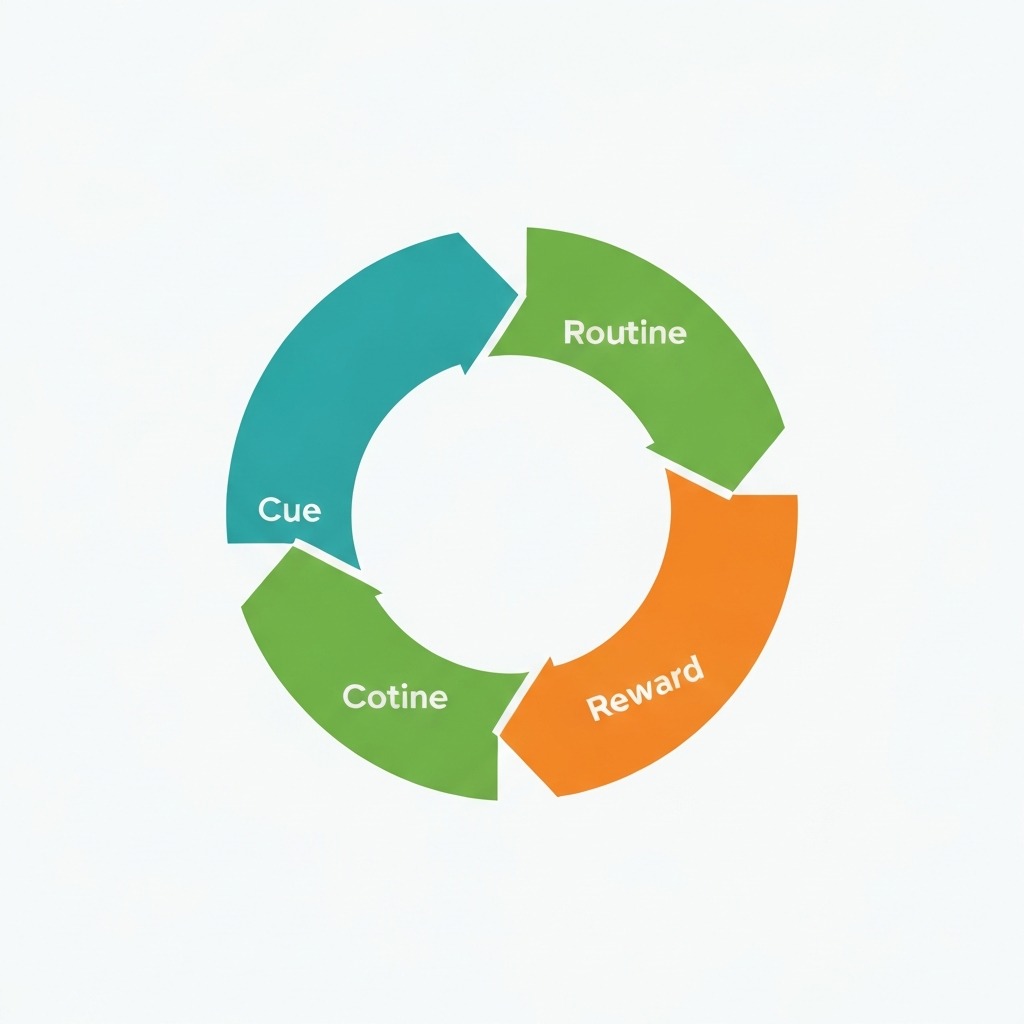
Every habit — good or bad — follows the same three-part neurological loop, first described by researchers at MIT and popularized by Charles Duhigg in The Power of Habit.
1. The Cue (Trigger)
The cue is the signal that initiates the automated behavior. Cues fall into five categories:
| Cue Type | Examples |
|---|---|
| Location | Walking past the break room, sitting on the couch |
| Time | 3 PM afternoon slump, right before bed |
| Emotional State | Boredom, stress, anxiety, loneliness |
| Other People | Coworkers who smoke, friends who drink |
| Preceding Action | Finishing a meal, opening your laptop |
Identifying your cue is the single most important step in breaking a habit. Most people skip this step and jump straight to "trying harder," which is why they fail.
2. The Routine (The Behavior Itself)
The routine is the behavior you want to change — scrolling your phone, stress eating, nail-biting, smoking, procrastinating, or any other pattern. This is what most people focus on eliminating, but it is actually the least important part of the loop to understand.
3. The Reward (Why Your Brain Keeps Doing It)
Every bad habit delivers a reward, or your brain would not have automated it. The key insight is that the reward is often not what you think it is.
- You might think you scroll social media because you enjoy the content. The real reward is often distraction from discomfort or a micro-dose of dopamine from novelty.
- You might think you snack at 3 PM because you are hungry. The real reward might be a break from monotonous work or a blood sugar spike that temporarily boosts energy.
- You might think you bite your nails because of anxiety. The real reward could be the physical sensation that provides temporary grounding.
How to Identify Your Real Reward
Use the Reward Testing Method:
- When you feel the urge, try a different behavior that delivers a different reward
- Wait 15 minutes
- If the craving is gone, you have found the real reward
- If the craving persists, try a behavior that delivers a different type of reward
- Repeat until the craving disappears after 15 minutes
Example: If you crave chips at 3 PM, try going for a walk (testing if the reward is a break). If the craving goes away, your brain wanted a break, not chips. If it persists, try eating an apple (testing if the reward is crunching/chewing). Keep testing until you isolate the real reward.
This method is one of the most powerful diagnostic tools in behavioral psychology. It transforms vague self-improvement goals into precise, targetable interventions.
The Habit Replacement Method: A Step-by-Step Framework
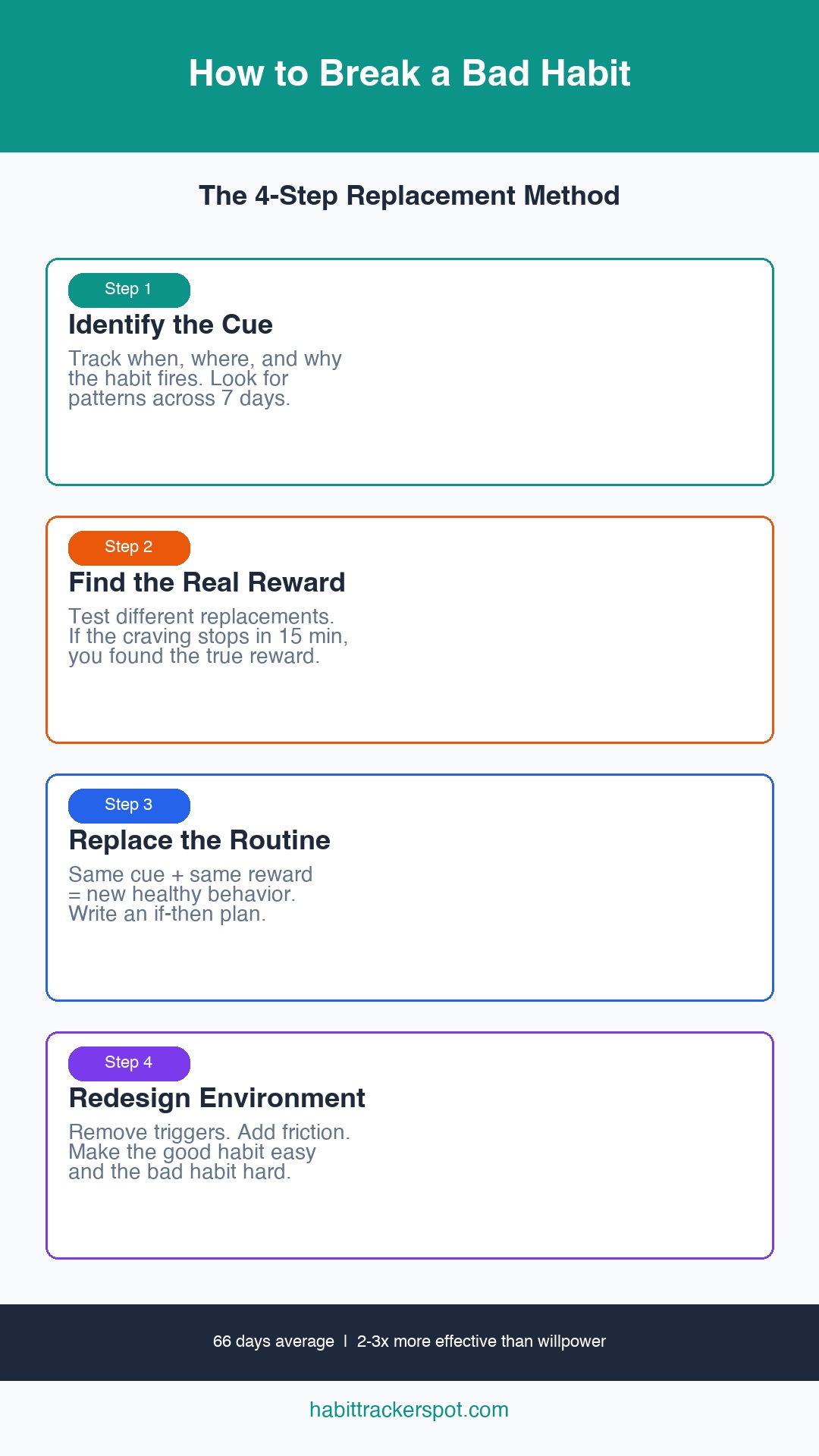
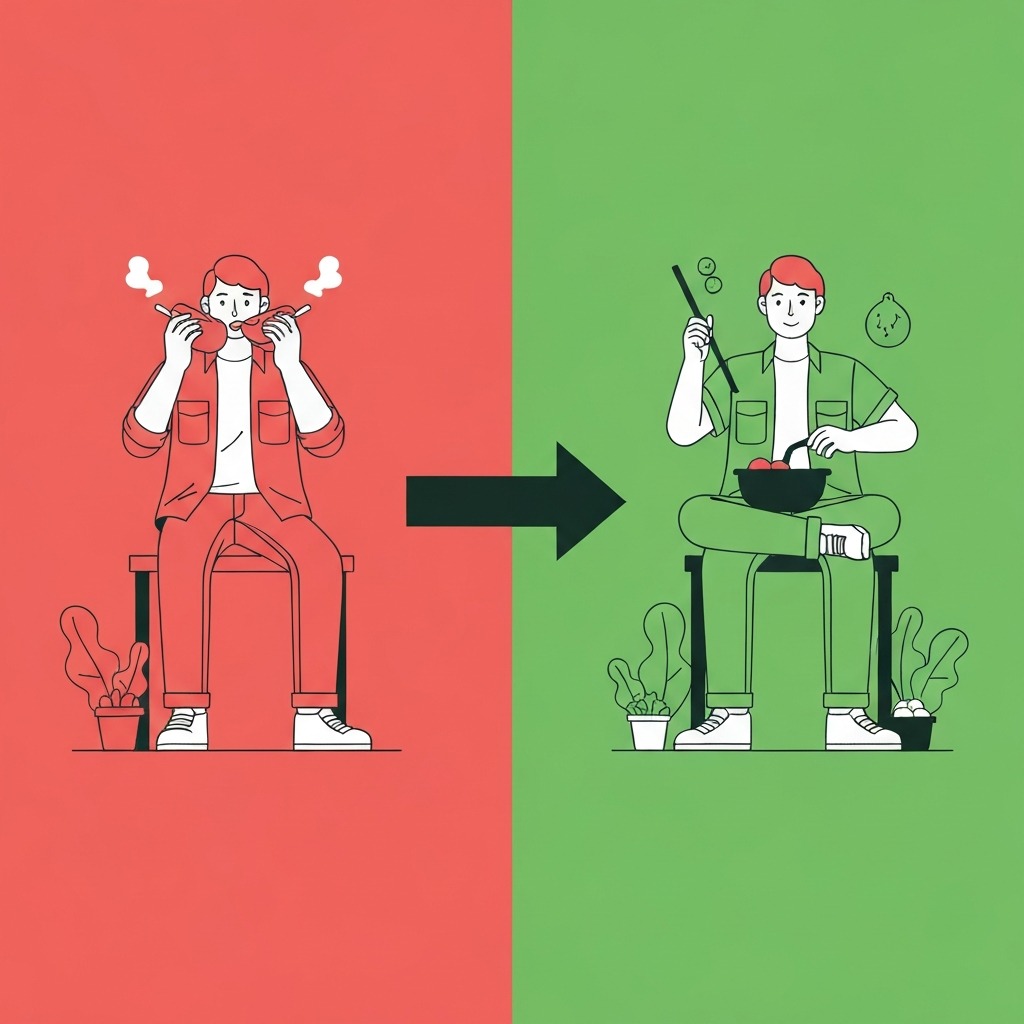
Now that you understand the loop, here is the framework that has the highest success rate in clinical research. This method, based on work by Duhigg, BJ Fogg, and James Clear, keeps the cue and reward intact but swaps in a new, healthier routine.
Step 1: Map Your Habit Loop
For one week, carry a small notebook or use a habit tracking app and log every time the habit occurs. Record:
- What time it happened
- Where you were
- How you felt emotionally
- Who was around
- What you did immediately before
After 7 days, patterns will emerge. You will likely see 1–2 dominant cues.
Step 2: Identify the True Reward
Use the Reward Testing Method described above. Test at least 3–4 different replacement behaviors over several days. You are looking for the substitution that reliably eliminates the craving within 15 minutes.
Step 3: Choose Your Replacement Routine
Your replacement routine must:
- Deliver the same core reward as the bad habit
- Be accessible whenever the cue fires (if the cue is stress at work, your replacement cannot require leaving the building)
- Be quick — match the time commitment of the old habit
- Be enjoyable enough that your brain does not resist the switch
| Bad Habit | Likely Reward | Replacement Routine |
|---|---|---|
| Social media scrolling | Novelty/distraction | Read 2 pages of a book, do a word puzzle |
| Stress eating | Comfort/energy boost | 5-minute walk, herbal tea, crunchy vegetables |
| Nail biting | Physical grounding | Squeeze a stress ball, rub smooth stone |
| Late-night snacking | Relaxation reward | Chamomile tea, 5-minute stretching routine |
| Procrastinating | Avoiding discomfort | Work for just 2 minutes (micro-commitment) |
| Smoking | Dopamine/oral fixation | Cinnamon toothpick, deep breathing, nicotine replacement |
Step 4: Create an Implementation Intention
Write your plan in this format:
When [CUE], I will [NEW ROUTINE] because it gives me [REWARD].
Example: "When I feel stressed at 3 PM (cue), I will walk to the water cooler and drink a full glass of water (routine) because it gives me a break and an energy boost (reward)."
Research by Peter Gollwitzer shows that implementation intentions increase the probability of following through by 2–3x compared to motivation alone. The specificity matters — vague plans ("I will be healthier") fail, while precise if-then plans ("When X, I will do Y") succeed.
Step 5: Stack Your Replacement Onto an Existing Habit
One of the most effective ways to lock in your new routine is habit stacking — linking your replacement behavior to an existing habit that is already automatic. For example: "After I pour my morning coffee (existing habit), I will write down my top 3 priorities (replacement for phone scrolling)."
Habit stacking works because your existing habits provide built-in cues. You do not need to remember to perform the new behavior — your brain's existing automation triggers it for you. This technique, popularized by James Clear, has roots in the Premack Principle from behavioral psychology.
Step 6: Track and Iterate
Use a habit tracker to monitor your success rate daily. If you are building new routines and habits, tracking provides the feedback loop your brain needs. Aim for 80% compliance in the first two weeks, not 100%. Perfectionism kills habit change.
Environment Design: Remove Triggers Before They Fire
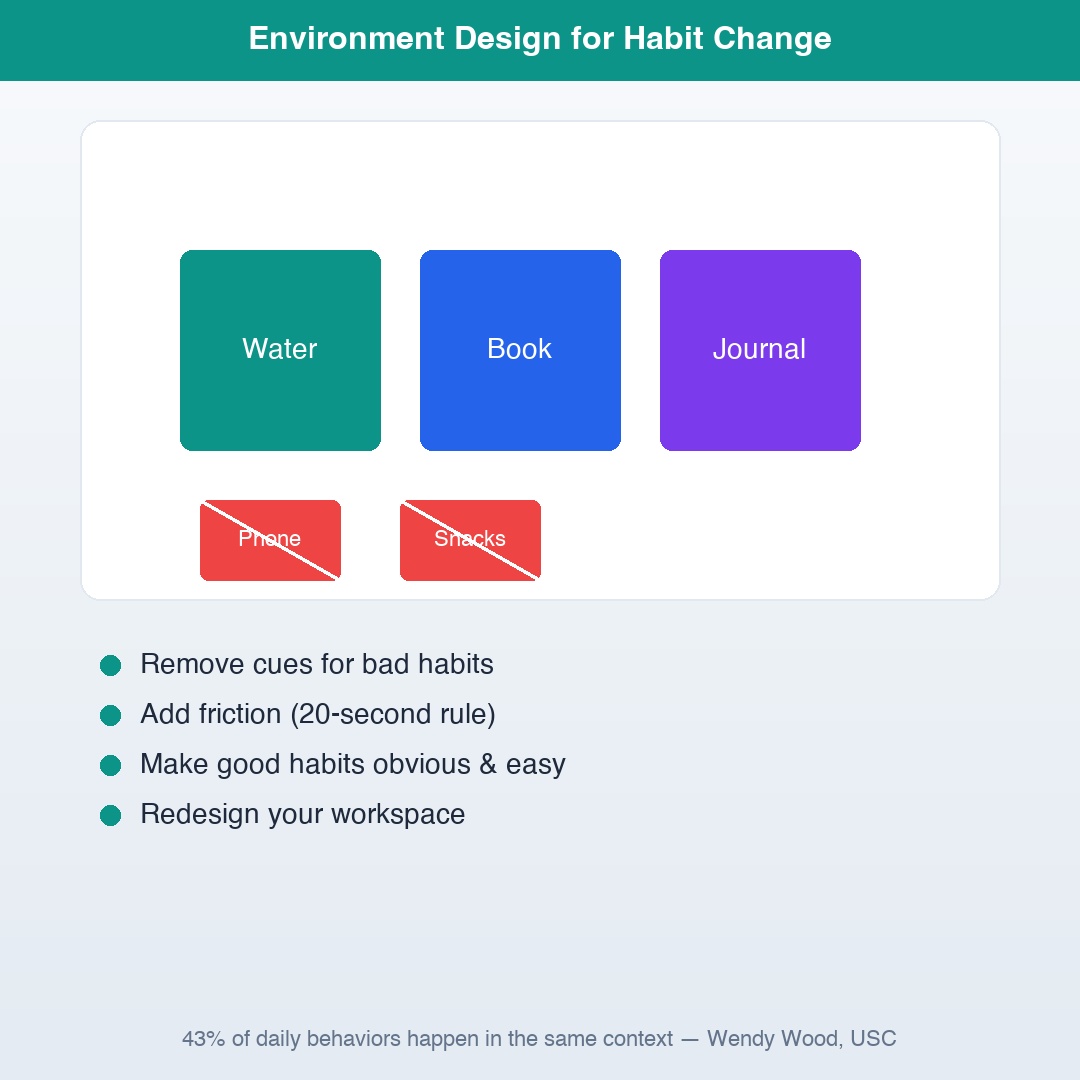
This is the most underrated strategy in habit breaking. Research by Wendy Wood at the University of Southern California found that 43% of daily behaviors are performed habitually in the same context. Change the context, and you dramatically weaken the habit.
The Two Rules of Environment Design
Rule 1: Make the bad habit invisible and difficult.
- Remove cues from your environment (hide the candy, delete the app, move the ashtray)
- Add friction (put your phone in another room, use website blockers, do not keep junk food in the house)
- Break the spatial association (rearrange your workspace, sit in a different spot)
Rule 2: Make the replacement habit obvious and easy.
- Place cues for the new behavior where the old cues used to be (put a book where your phone was, place water bottles where snacks were)
- Reduce friction for the new behavior to near zero (pre-cut vegetables ready to grab, walking shoes by the door, journal open on the desk)
- Use visual reminders (sticky notes, habit tracker on the fridge, phone wallpaper with your intention)
Environment Design Examples
| Bad Habit | Environment Change |
|---|---|
| Phone scrolling in bed | Charge phone in another room, place a book on the pillow |
| Impulse online shopping | Remove saved credit cards, install a purchase-delay extension |
| Snacking while watching TV | Do not eat in the living room, replace snack bowl with water |
| Smoking | Remove all ashtrays, avoid break areas with smokers |
| Procrastinating at desk | Clear desk of distractions, use a dedicated "focus" workspace |
The 20-Second Rule
Shawn Achor's research found that adding just 20 seconds of friction to a behavior significantly reduces how often you do it. Conversely, removing 20 seconds of friction from a desired behavior makes it much more likely. This tiny change leverages your brain's preference for the path of least resistance.
Practical applications of the 20-second rule:
- Put your guitar on a stand in the living room (20 seconds closer) and you will practice more
- Move social media apps off your home screen and into a folder (20 seconds of friction) and you will scroll less
- Set out your workout clothes the night before (20 seconds removed) and you will exercise more consistently
Environment design pairs especially well with a structured morning routine. When you control the first hour of your day through environmental cues, the cascade effect can protect your behavior for the remaining 15 hours.
The Identity Shift: Becoming Someone Who Does Not Do That
Most habit-breaking advice focuses on behavior and outcomes. But the most lasting change happens at the identity level. James Clear argues in Atomic Habits that there are three layers of behavior change:

- Outcomes — what you get (lose weight, quit smoking, save money)
- Processes — what you do (the replacement routine, environment design)
- Identity — who you believe you are
Most people try to change habits at the outcome level. They say "I want to quit smoking" or "I want to stop scrolling." This creates a constant battle between who you are (a smoker) and what you are trying to do (not smoke).
Identity-based change flips the script. Instead of "I am trying to quit smoking," you say "I am not a smoker." Instead of "I am trying to stop procrastinating," you say "I am someone who starts immediately."
How to Shift Your Identity
The shift does not happen overnight. It happens through small evidence-based steps:
-
Decide who you want to be. Not what you want to achieve — who you want to become. "I am someone who respects their body." "I am someone who is present with their family."
-
Prove it to yourself with small wins. Every time you perform your replacement routine instead of the bad habit, you cast a vote for your new identity. One vote does not win an election, but enough votes create a landslide.
-
Use identity-based language. When offered a cigarette, instead of saying "No thanks, I'm trying to quit" (outcome-based), say "No thanks, I don't smoke" (identity-based). The language matters because it reinforces the neural association between you and the new identity.
-
Surround yourself with your new tribe. Find people who already embody the identity you want. Their behavior becomes your new normal. If you want to be a non-drinker, spend time with people who socialize without alcohol.
Research published in the Journal of Consumer Research found that participants who framed refusals as "I don't" (identity) were significantly more likely to maintain their commitment than those who said "I can't" (restriction). The identity frame was more than twice as effective.
Accountability Systems That Actually Work
Accountability multiplies your success rate. A study by the American Society of Training and Development found that people who have a specific accountability appointment with someone they have committed to are 95% likely to achieve their goal, compared to 10% with just a goal in mind.

Types of Accountability
1. Accountability Partner Find someone who is also working on a habit change. Check in daily via text. Keep it simple: "Day 12 — no scrolling after 9 PM. Craving hit at 10:15, did 5 minutes of stretching instead."
2. Public Commitment Tell people about your goal. The social pressure of not wanting to look inconsistent is a powerful motivator. Post your 30-day challenge on social media or tell your team at work.
3. Habit Tracking Visual tracking creates its own accountability loop. Seeing an unbroken chain of check marks creates motivation to keep the streak alive. Jerry Seinfeld's "don't break the chain" method works because losing a streak feels psychologically costly.
For the best tracking tools and methods, a combination of app-based and physical tracking tends to produce the strongest results.
4. Stakes and Consequences Consider using a commitment contract. Give a friend $100 and tell them to donate it to a cause you dislike if you do not meet your 30-day goal. The threat of loss is a stronger motivator than the promise of reward (loss aversion).
The Check-In Framework
Use this daily accountability check-in template:
- Did the cue fire today? (Yes/No)
- Did I perform the replacement routine? (Yes/No)
- How strong was the craving? (1–10)
- What made today easier or harder?
Track these data points in a spreadsheet or journal. After two weeks, you will have a clear map of your triggers, your progress curve, and the situations that require extra preparation.
Your 30-Day Habit-Breaking Plan
This is the concrete plan that ties everything together. Follow this week-by-week structure for the highest probability of permanent change.

Week 1: Awareness (Days 1–7)
Goal: Map your habit loop completely. Do not try to change anything yet.
- Track every instance of the habit (time, location, emotion, preceding action)
- Identify your top 1–2 cues
- Test 3–4 replacement behaviors using the Reward Testing Method
- Write your implementation intention
- Set up your tracking system (app or journal)
- Choose your new identity statement
Expected difficulty: Low. You are observing, not fighting.
Week 2: Environment + Replacement (Days 8–14)
Goal: Redesign your environment and start using your replacement routine.
- Remove or hide all cues for the bad habit
- Add friction to the bad habit (20-second rule)
- Place cues for the replacement routine in visible locations
- Start performing the replacement routine every time the cue fires
- Check in with your accountability partner daily
- Log your success rate (aim for 70%+)
Expected difficulty: Moderate. Cravings will peak around days 10–14. This is the hardest week — if you can get through it, the probability of long-term success increases dramatically.
Week 3: Strengthening (Days 15–21)
Goal: Solidify the new neural pathway.
- Continue the replacement routine with 80%+ consistency
- Identify and address any remaining triggers you missed
- Practice the replacement routine even when the cue does not fire (overlearning)
- Reward yourself for milestones (not with the old habit)
- Review and adjust your strategy based on what is and is not working
- Begin using identity-based language consistently
Expected difficulty: Decreasing. The replacement starts to feel more natural.
Week 4: Automation (Days 22–30)
Goal: The replacement behavior begins to feel automatic.
- The replacement routine should fire with minimal conscious effort
- Create a relapse protocol (see below)
- Plan for high-risk situations (travel, holidays, stressful periods)
- Celebrate your 30-day milestone
- Transition to weekly check-ins instead of daily
Expected difficulty: Low. You are building momentum and confidence.
Your Relapse Protocol
Relapse is not failure — it is data. If you slip:
- Do not catastrophize. One slip does not erase 20 days of progress. The neural pathway for the new habit still exists.
- Identify what triggered the slip. Was it a cue you had not accounted for? Stress? A new environment?
- Return to the replacement routine immediately. Do not wait until tomorrow or Monday.
- Add a new environmental safeguard to prevent the same trigger from firing again.
- Tell your accountability partner. Shame thrives in secrecy.
Research on relapse prevention from Addiction journal shows that people who treat lapses as learning opportunities (rather than evidence of failure) are 3x more likely to achieve long-term success. The critical variable is not whether you slip — it is how fast you recover.
Best Tools for Breaking Bad Habits
These products support the habit-breaking framework by providing tracking, accountability, and environmental design tools.
Clever Fox Habit Tracker Journal
Dedicated habit tracking journal with 90-day layout, reflection pages, and color-coded sections. Perfect for the 30-day plan and beyond.
$15.99
Check Price on AmazonThe Power of Habit by Charles Duhigg
The foundational book on habit loops and how to change them. Essential reading for understanding the science behind the replacement method.
$12.49
Check Price on AmazonAtomic Habits by James Clear
The modern classic on identity-based habit change, environment design, and the 1% improvement philosophy. Covers both building good habits and breaking bad ones.
$13.79
Check Price on AmazonTime Timer Visual Countdown
Visual timer for implementing the 2-minute micro-commitment technique and the 90-second craving surfing method. Reduces procrastination by making time tangible.
$34.95
Check Price on AmazonTheraband Hand Exerciser Stress Ball
Durable stress ball for replacing nail-biting, fidgeting, or other physical habits with a healthier sensory alternative. Recommended in the replacement routine section above.
$8.99
Check Price on AmazonMoleskine Daily Planner & Habit Tracker
Premium daily planner with built-in habit tracking grids. Combines scheduling with accountability tracking in one elegant notebook.
$22.95
Check Price on AmazonKitchen Safe Time Locking Container
Locks away tempting items (phone, snacks, credit cards) for a set period. The ultimate friction-adding tool for environment design.
$49.99
Check Price on AmazonWhen Habits Signal Something Deeper

Not every bad habit is just a bad habit. Sometimes persistent, compulsive behaviors are symptoms of deeper issues that require professional support.
When to Seek Professional Help
Consider speaking with a therapist or counselor if:
- The habit causes significant distress or shame and you cannot stop despite repeated attempts
- The behavior escalates over time (needing more to get the same reward)
- Physical health is affected (substance abuse, eating disorders, self-harm)
- The habit is a coping mechanism for trauma, anxiety, or depression
- Multiple attempts with structured plans have failed over 6+ months
Cognitive Behavioral Therapy (CBT) has strong evidence for treating habitual behaviors, particularly when combined with the habit replacement framework. A therapist can help identify underlying psychological drivers that self-directed methods may miss.
Acceptance and Commitment Therapy (ACT) is another evidence-based approach that works well for habit change. Rather than trying to control or eliminate urges, ACT teaches you to observe them without acting on them — accepting the discomfort while committing to values-aligned behavior.
Mindfulness as a Habit-Breaking Tool
Mindfulness-Based Stress Reduction (MBSR) has shown promise in breaking habits tied to emotional cues. A study published in Drug and Alcohol Dependence found that mindfulness training was 5x more effective than traditional smoking cessation programs at maintaining abstinence.
The mechanism is simple: mindfulness creates a gap between the cue and the routine. Instead of automatically reaching for the cigarette (or phone, or snack), you notice the craving, observe it without judgment, and let it pass. Over time, this weakens the automatic association.
A simple mindfulness exercise for cravings:
- When the craving hits, pause and take 3 deep breaths
- Notice where you feel the craving in your body
- Label it: "I am noticing a craving for [habit]"
- Rate the craving intensity from 1–10
- Wait 90 seconds — most cravings peak and subside within this window
- Choose your replacement routine consciously
This technique, sometimes called "urge surfing," was developed by Dr. Alan Marlatt at the University of Washington. It works because cravings are like waves — they build, crest, and recede. Most last 15–20 minutes at most. If you can ride out the peak (usually at 60–90 seconds), the intensity drops sharply.
FAQ
How long does it take to break a bad habit permanently?
Research from the European Journal of Social Psychology shows it takes an average of 66 days to break a habit, though the range is 18 to 254 days depending on the complexity of the behavior and individual factors. Simple habits like skipping a morning snack may take 3–4 weeks, while deeply ingrained behaviors like smoking can take 3–6 months of consistent effort. The 30-day plan in this guide gets you through the critical formation period, after which continued practice solidifies the change.
Can you really break a bad habit permanently?
Yes, but it requires replacing the habit rather than simply stopping it. Neuroscience research shows that habit neural pathways never fully disappear — they weaken through disuse. The most effective permanent approach is to identify your habit cue and reward, then insert a healthier routine that delivers a similar reward. Combined with environment design and identity-level change, this method produces lasting results.
What is the most effective method to break a bad habit?
The most effective method is the Habit Replacement Framework, which involves: (1) identify the cue that triggers the behavior, (2) understand the reward you are seeking, (3) insert a new routine that delivers the same reward, (4) redesign your environment to support the new behavior, and (5) shift your identity to align with the person you want to become. Studies show this method has a 2–3x higher success rate than willpower-based approaches.
Why do bad habits keep coming back?
Bad habits resurface because the neural pathways that encode them never fully disappear. Stress, fatigue, and environmental cues can reactivate dormant habit loops. This is why environment design and having a relapse protocol are essential parts of any permanent habit-breaking strategy. The key is not perfection — it is having a system for rapid recovery when slips occur.
Does willpower work for breaking habits?
Willpower alone has a failure rate of over 80% for long-term habit change. Research shows willpower is a finite resource that depletes throughout the day. Effective habit breaking relies on systems — environment design, habit replacement, accountability, and tracking — rather than raw willpower. People who appear to have extraordinary willpower have typically built better systems, not stronger resolve.
What role does environment play in breaking bad habits?
Environment design is one of the most powerful tools for breaking bad habits. Research by Wendy Wood at USC found that roughly 43% of daily behaviors are performed in the same location each time. By modifying your environment to remove cues and add friction to the bad habit, you can reduce the behavior by up to 70% without relying on willpower. Start with the 20-second rule: add 20 seconds of friction to the bad habit and remove 20 seconds of friction from the replacement.
About the Author
Dr. Nathan Cole is a behavioral psychologist specializing in habit formation, behavior change, and cognitive-behavioral interventions. With over 18 years of clinical experience and published research in behavioral science, he has helped thousands of clients break unwanted habits and build sustainable routines. Dr. Cole's work integrates the latest findings from neuroscience, clinical psychology, and applied behavioral science. He is a fellow of the Association for Behavioral and Cognitive Therapies and a regular contributor to peer-reviewed journals on habit and addiction research.
Sources
-
Lally, P., van Jaarsveld, C. H. M., Potts, H. W. W., & Wardle, J. (2010). How are habits formed: Modelling habit formation in the real world. European Journal of Social Psychology, 40(6), 998–1009.
-
Duhigg, C. (2012). The Power of Habit: Why We Do What We Do in Life and Business. Random House.
-
Wood, W., & Neal, D. T. (2007). A new look at habits and the habit-goal interface. Psychological Review, 114(4), 843–863.
-
Gollwitzer, P. M. (1999). Implementation intentions: Strong effects of simple plans. American Psychologist, 54(7), 493–503.
-
Baumeister, R. F., Bratslavsky, E., Muraven, M., & Tice, D. M. (1998). Ego depletion: Is the active self a limited resource? Journal of Personality and Social Psychology, 74(5), 1252–1265.
-
Brewer, J. A., et al. (2011). Mindfulness training for smoking cessation: Results from a randomized controlled trial. Drug and Alcohol Dependence, 119(1-2), 72–80.
-
Clear, J. (2018). Atomic Habits: An Easy & Proven Way to Build Good Habits & Break Bad Ones. Avery.
-
Achor, S. (2010). The Happiness Advantage: How a Positive Brain Fuels Success in Work and Life. Currency.
-
Patrick, V. M., & Hagtvedt, H. (2012). "I don't" versus "I can't": When empowered refusal motivates goal-directed behavior. Journal of Consumer Research, 39(2), 371–381.
-
Marlatt, G. A., & Donovan, D. M. (2005). Relapse Prevention: Maintenance Strategies in the Treatment of Addictive Behaviors (2nd ed.). Guilford Press.